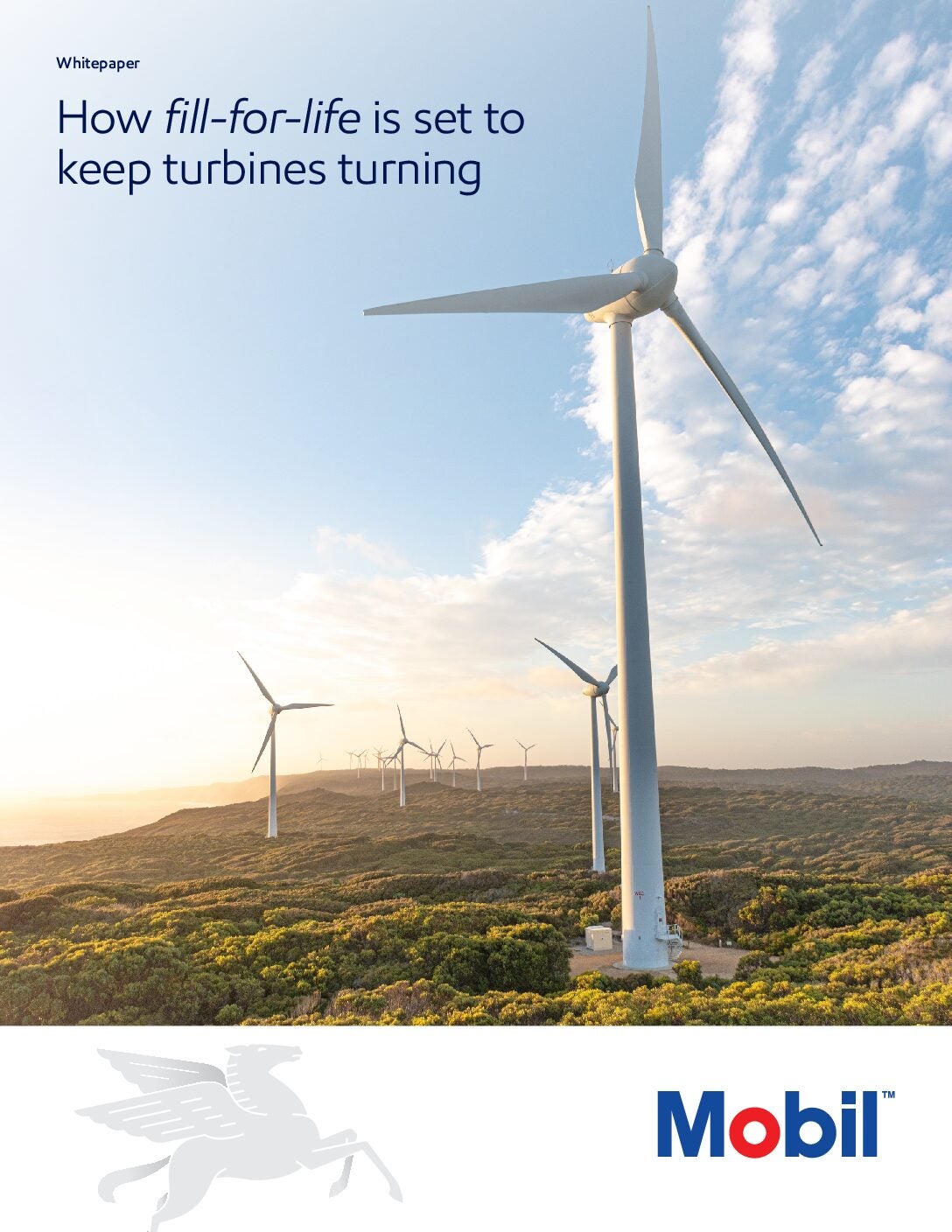


Wind turbines place significant demands on their drivetrains, with gearboxes needing to transform slow, variable rotor motion into high-speed input for generators while enduring fluctuating loads, vibrations, temperature variations, moisture, and extended maintenance intervals. In these conditions, even minor issues with bearing surfaces, lubricant quality, or electrical control can lead to costly failures.
White etching cracks (WEC) are among the most challenging of these failure modes. Named after the pale microstructural changes that become visible after etching steel, WEC can develop below the bearing surface before operators have any obvious visual warning. By the time cracking reaches the surface, bearing failure may already be close.
Approximately 60% of high-speed bearing failures in wind turbines are attributed to white etching cracking[i]. Despite this, no single definitive trigger has been established, with mechanical, electrical, operational and chemical factors all implicated. Given the high proportion of high-speed bearing failures associated with WEC, mitigation should be treated as a core reliability. The following six strategies outline key areas to help owners, operators, and maintenance teams reduce WEC risk.
1. Mitigating hydrogen embrittlement
Research has examined whether hydrogen may be generated through lubricant degradation, water contamination or tribochemical reactions at newly exposed bearing surfaces. A study by Kürten et al., published in Engineering Failure Analysis, investigated hydrogen-assisted rolling contact fatigue linked to lubricant degradation and the formation of white etching areas. It noted that hydrogen in steel under rolling contact can promote early fatigue failure and examined how lubricant degradation and hydrogen evolution may contribute to microstructural changes associated with WEC and white-structure flaking. Once absorbed into the steel, hydrogen can contribute to embrittlement, making bearings more vulnerable to crack initiation and propagation.[ii]
While operators cannot remove every possible source of hydrogen, they can help reduce the conditions that encourage it. This means using appropriate lubricant chemistry, limiting water contamination, maintaining oil cleanliness and avoiding operating regimes that increase frictional energy at bearing contacts.
2. Reducing high frictional stress
In WEC, high frictional forces can contribute to tribofilm instability, localised heating, surface stress and hydrogen movement into vulnerable zones of the bearing.
Consequently, load management, proper viscosity selection, and friction-controlled additive technology are important for prevention. Gear oils must maintain film strength across a wide operating envelope, including cold starts, variable speeds and heavy loads. The American Clean Power emphasises that wind turbine lubricants must perform under diverse climates and loads, with viscosity selection tailored to gearbox requirements and operating conditions.[iii]
3. Bearing materials and heat treatments
Standard bearing steels can be vulnerable when exposed to the combined stresses that drive WEC. When specifying new assets, refurbishing gearboxes, or replacing bearings, operators should consider upgraded materials and heat treatments.
Carbonitrided steels, high-nitrogen alloys and anti-WEC bearing steels can improve surface hardness, residual compressive stress and resistance to crack propagation. These material choices are especially relevant in high-speed shaft bearings and other locations where WEC has historically been concentrated. While material upgrades will not compensate for poor lubrication or contamination control, they can strengthen the system’s resilience.
4. Protective coatings
Surface coatings can act as a barrier between bearing steel, lubricant chemistry and damaging contact conditions. Black oxide coatings are widely discussed in WEC mitigation because they can modify frictional behaviour, dampen surface interactions and help restrict hydrogen diffusion.
For critical applications, other engineered coatings, including ceramic or diamond-like carbon approaches. The commercial decision should be based on gearbox design, failure history, turbine accessibility and the cost of downtime.
5. Preventing electrical pitting and stray currents
Electrical effects are another contributor to premature bearing damage. For example, stray currents can arc through bearing contacts, creating localised pitting and surface disruption. Once the surface is compromised, the bearing becomes more vulnerable to fatigue and crack development.
Mitigation starts with sound turbine grounding, correct generator and converter design, insulated bearing arrangements where required, and routine maintenance checks. Electrical protection is sometimes treated separately from lubrication strategy, but both can influence the bearing contact surface.
6. Make condition monitoring part of the lubrication strategy
Because WEC can develop below the surface, operators need a broader condition-monitoring regime than visual inspection alone can provide. Oil analysis should track cleanliness, viscosity, oxidation, acid number, moisture, wear debris and additive health. Online oil condition monitoring may also add value in hard-to-access turbines by giving operators an earlier warning of changing conditions.
The ACP emphasises the importance of standardised sampling practices, laboratory analysis, and fleetwide oil condition monitoring, including wear-debris and oil-quality measurements. It also frames lubrication management as a reliability programme that may improve uptime and reduce maintenance disruption.
For large fleets, this data is most powerful when aggregated. Patterns across turbine models, sites, lubricant batches and operating regimes can reveal whether problems are isolated incidents or systemic risks.
WEC-resistant lubricant chemistry
The base oils and additive systems in gear oil interact with bearing surfaces to form tribofilms. Under certain conditions, those interactions can influence friction, hydrogen activity and fatigue behaviour, helping to reduce the conditions associated with WEC.
For this reason, operators should select wind turbine gearbox oils that have been tested specifically for WEC performance. Mobil SHC™ Gear 320 WT has received DNV-GL design evaluation certification, recognising that its in-service performance does not contribute to the oil-related effects of WEC. ExxonMobil says the product is designed for wind turbine gearboxes operating in extreme temperatures and corrosive environments, with protection against scuffing and micropitting fatigue.[iv]
However, the most effective WEC strategy combines multiple measures, utilising WEC-tested lubricants, upgraded bearing materials, coatings, correct loading, electrical protection and disciplined monitoring.
This is just part of what needs to be a broader shift; lubrication should move from a maintenance routine to an asset management strategy. In wind power, drivetrain reliability can depend on the controlled interaction of bearing materials, lubricant chemistry, mechanical loading and electrical conditions. WEC prevention should therefore begin at these critical interfaces.
To find out more about how lubrication management can help reduce WEC risk and support long-term wind turbine reliability, download the whitepaper below.
[i] https://www.mobil.eu/-/media/project/wep/mobil/mobil-eu/new-pdfs/mobil-gear-320-wt—digital
[ii]https://www.researchgate.net/publication/331143717_Hydrogen_assisted_rolling_contact_fatigue_due_to_lubricant_degradation_and_formation_of_white_etching_areas
[iii] Lubricants as an Asset | ACP Standards & Practices
[iv] https://www.mobil.eu/en-gb/lubricant-expertise/resources/dnv-gl-second-certification-wec-performance