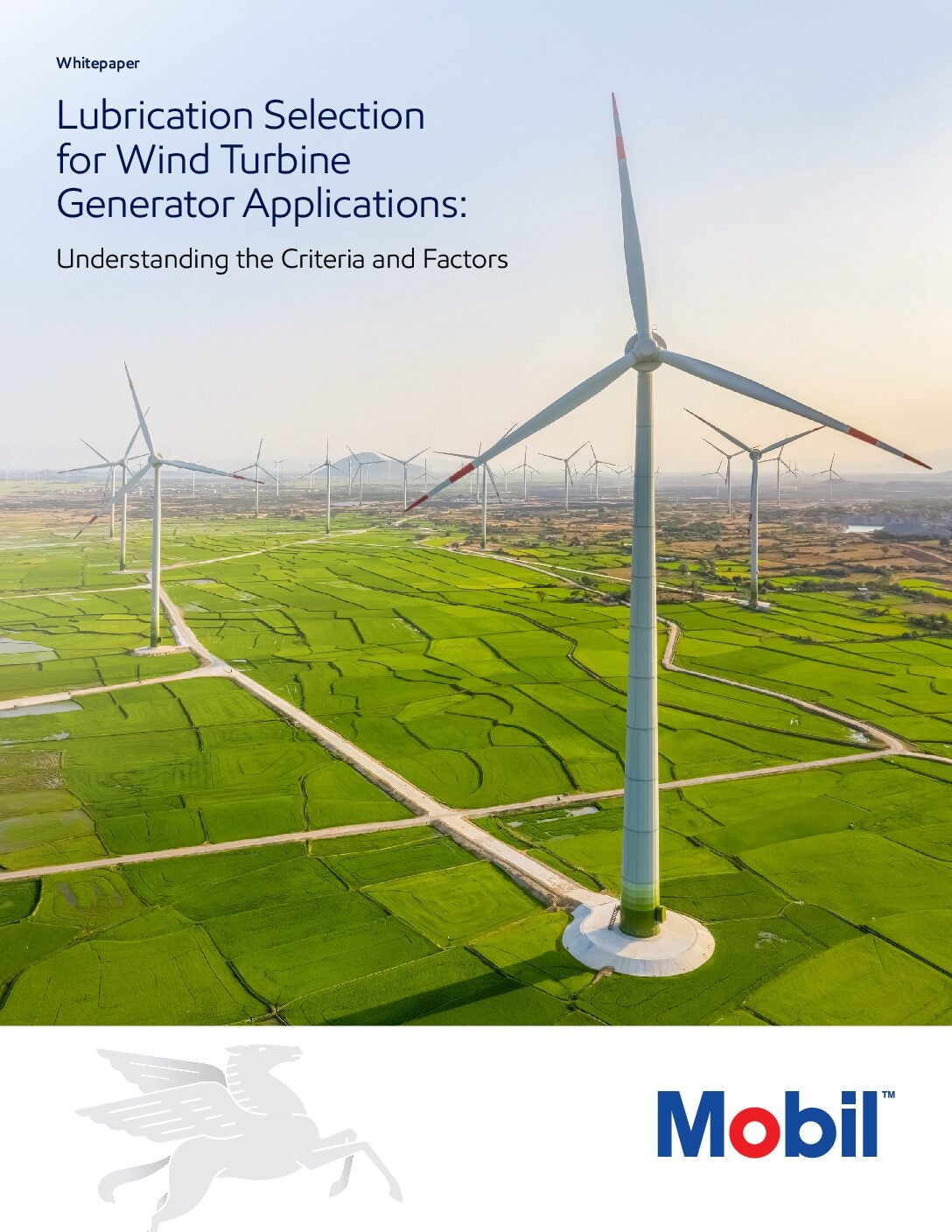


Wind energy is becoming a critical pillar of global power generation, but as the sector matures, operators are facing new operational pressures, including rising maintenance costs, supply chain delays, skills shortages, and increasing turbine complexity. These challenges are forcing operators to rethink every aspect of turbine performance, including lubrication.
Exxon Mobil’s latest whitepaper explores why lubrication is not just a maintenance detail, but a strategic lever helping to improve reliability, reduce downtime, and lower lifetime operating costs.
Lubricants as strategic assets
Today’s turbines are bigger, more powerful, and operating longer than ever before. At the same time, many fleets are ageing, which increases the likelihood of component fatigue and unplanned repairs. Gearbox maintenance remains a significant driver of operations and maintenance (O&M) costs due to the high cost of components, specialist labour requirements, and downtime-related operational losses.
Many gearbox and bearing failures are directly linked to lubrication quality, contamination, or degradation. Poor lubricant performance can accelerate wear, increase friction, and trigger failure mechanisms such as micropitting and surface fatigue. Selecting the right lubricant and managing it properly can help to extend component life, enable longer service intervals, and reduce unplanned maintenance.
Selecting the right synthetic lubricants
Synthetic gear oils can offer superior molecular stability, improved low-temperature performance, and longer service life than conventional mineral oils. These performance characteristics are particularly important given the unique operating profile of wind turbines, which experience wide temperature ranges, variable loads, and long service intervals between maintenance events. Advanced additive chemistry is helping address emerging failure risks, including white etching cracking (WEC), micropitting, and additive depletion over long service intervals.
Exxon Mobil’s whitepaper outlines the critical selection criteria operators should evaluate, including thermal and oxidation stability, as wind turbine gear oils must withstand years of thermal stress while maintaining viscosity and protective performance. Poor oxidation resistance leads to sludge formation, viscosity increase, and reduced lubrication effectiveness. Another consideration is wear protection and load capacity, given that turbine gearboxes operate under extreme load conditions. Lubricants must form durable protective films that prevent metal-to-metal contact even during transient operating conditions.
Materials compatibility is another important selection criterion. Many turbine components contain copper alloys or “yellow metals,” so lubricants must protect these materials without causing corrosion. They must also be water-tolerant and resistant to contamination, as water ingress is common in wind turbines. Effective lubricants must tolerate moisture while maintaining protective properties and enabling filtration.
Fill-for-life wind turbine oil
One of the most significant opportunities in wind O&M is safely extending oil drain intervals. Longer service intervals can help to reduce labour requirements, minimise downtime, lower lubricant consumption, and reduce environmental impact by decreasing oil waste and disposal requirements.
Mobil SHC Gear 320 WindPower is a next-generation synthetic gear oil formulated specifically for wind turbine gearbox needs. Developed through extensive R&D and field testing, it offers several distinct performance advantages, including being engineered for “fill-for-life,” potentially lasting the full design life of a wind turbine (approximately 25 years) on a single fill.
Emerging strategies for extending oil life, such as top-treat additive replenishment and condition-based monitoring, further allow operators to maintain lubricant performance without full oil replacement, optimising both cost and reliability over a turbine’s lifetime. Download the full whitepaper to understand how modern lubrication science is helping wind operators reduce costs, extend asset life, and improve operational resilience in an increasingly demanding energy landscape.